 Image 1 of 1
Bug has always had strong opinions about food. Not preferences, exactly — something more intense than that. Specific textures were non-negotiable. Certain smells would end a meal before it started. Foods that touched each other on the plate were a hard stop.
The first time I listed his accepted foods, I counted eleven. Eleven foods he would reliably eat without distress. That list became the beginning of everything we did next.
This guide is written from a parent's perspective for families navigating selective eating alongside a neurodevelopmental difference. It’s not a substitute for a feeding specialist, but a genuinely useful place to start.
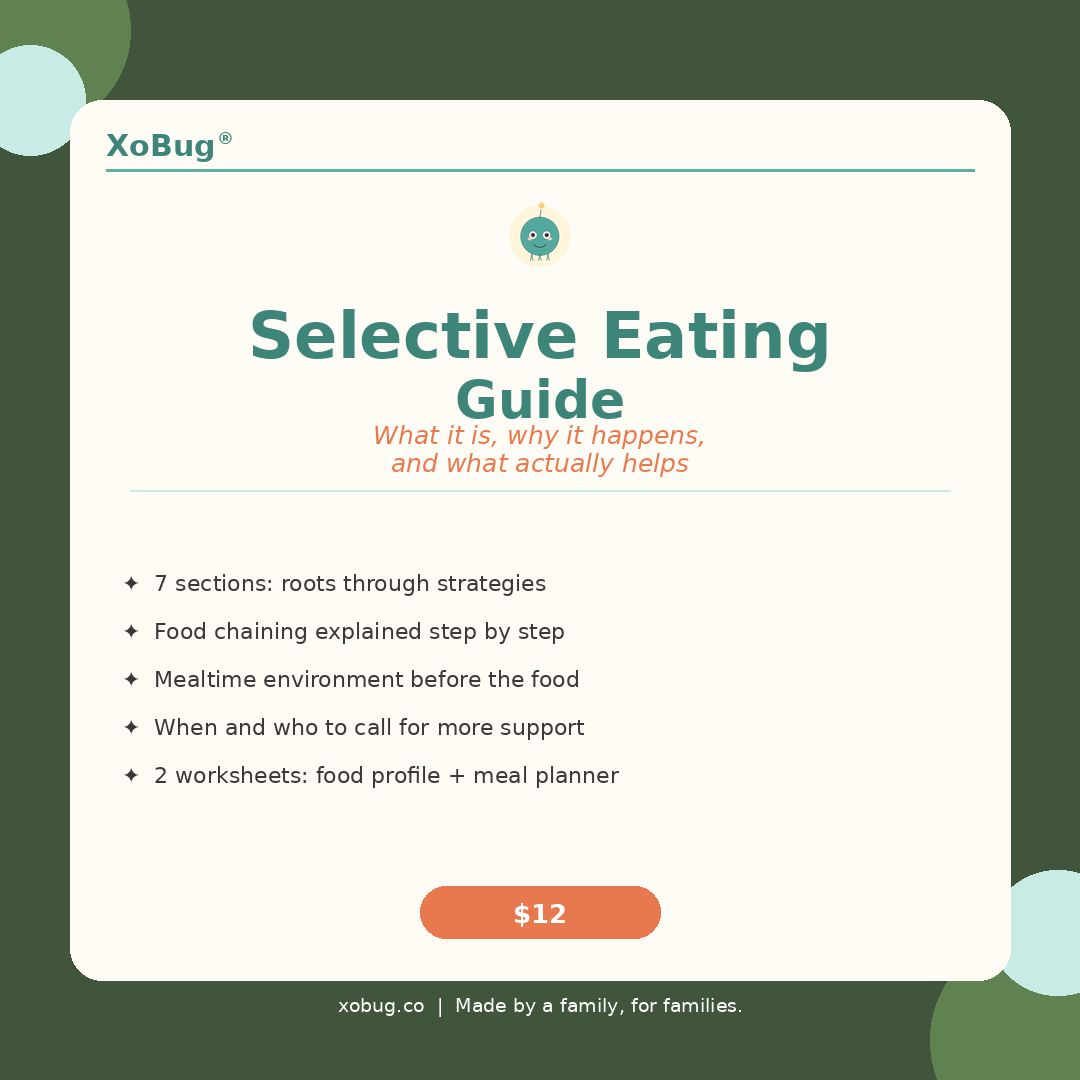
7 sections covering everything:
What selective eating actually is — and what it's often confused with
Why it's harder for our kids — sensory processing, routine, anxiety, oral motor
The roots of selective eating — medical factors, sensory, the anxiety feedback loop
How eating affects everything else — regulation, sleep, attention, GI health
Building a mealtime that works — the environment before the food
Strategies to try now — food chaining step by step, the six-step exposure ladder, pairing, choices, modeling
When to get more support — who to call, what to say to your pediatrician
2 worksheets: My Child's Food Profile — 18 fields, designed to bring to any feeding appointment and Our Mealtime Planner — food chain planning grid + weekly meal structure table
Written from lived experience. Informed by research. Not a substitute for a feeding specialist, dietitian, SLP, or physician — but a genuinely useful place to start.
© 2026 XoBug®. For personal and family use only. This guide reflects the personal experience of a parent. Always consult qualified professionals regarding your child's specific feeding needs.
Bug has always had strong opinions about food. Not preferences, exactly — something more intense than that. Specific textures were non-negotiable. Certain smells would end a meal before it started. Foods that touched each other on the plate were a hard stop.
The first time I listed his accepted foods, I counted eleven. Eleven foods he would reliably eat without distress. That list became the beginning of everything we did next.
This guide is written from a parent's perspective for families navigating selective eating alongside a neurodevelopmental difference. It’s not a substitute for a feeding specialist, but a genuinely useful place to start.
7 sections covering everything:
What selective eating actually is — and what it's often confused with
Why it's harder for our kids — sensory processing, routine, anxiety, oral motor
The roots of selective eating — medical factors, sensory, the anxiety feedback loop
How eating affects everything else — regulation, sleep, attention, GI health
Building a mealtime that works — the environment before the food
Strategies to try now — food chaining step by step, the six-step exposure ladder, pairing, choices, modeling
When to get more support — who to call, what to say to your pediatrician
2 worksheets: My Child's Food Profile — 18 fields, designed to bring to any feeding appointment and Our Mealtime Planner — food chain planning grid + weekly meal structure table
Written from lived experience. Informed by research. Not a substitute for a feeding specialist, dietitian, SLP, or physician — but a genuinely useful place to start.
© 2026 XoBug®. For personal and family use only. This guide reflects the personal experience of a parent. Always consult qualified professionals regarding your child's specific feeding needs.