 Image 1 of 1
Bug used to spiral every time we said no to screen time.
We started saying "Yes — after dinner and teeth." The first time he went and brushed his teeth without a fight, we both cried a little. It wasn't magic. It was repetition, and giving him something real to wait for.
These two strategies — No + a Choice and Yes, When — are backed by research and simple enough to use at 7am on a Tuesday. They work because they give your child somewhere to go instead of a wall to run into.
What's inside:
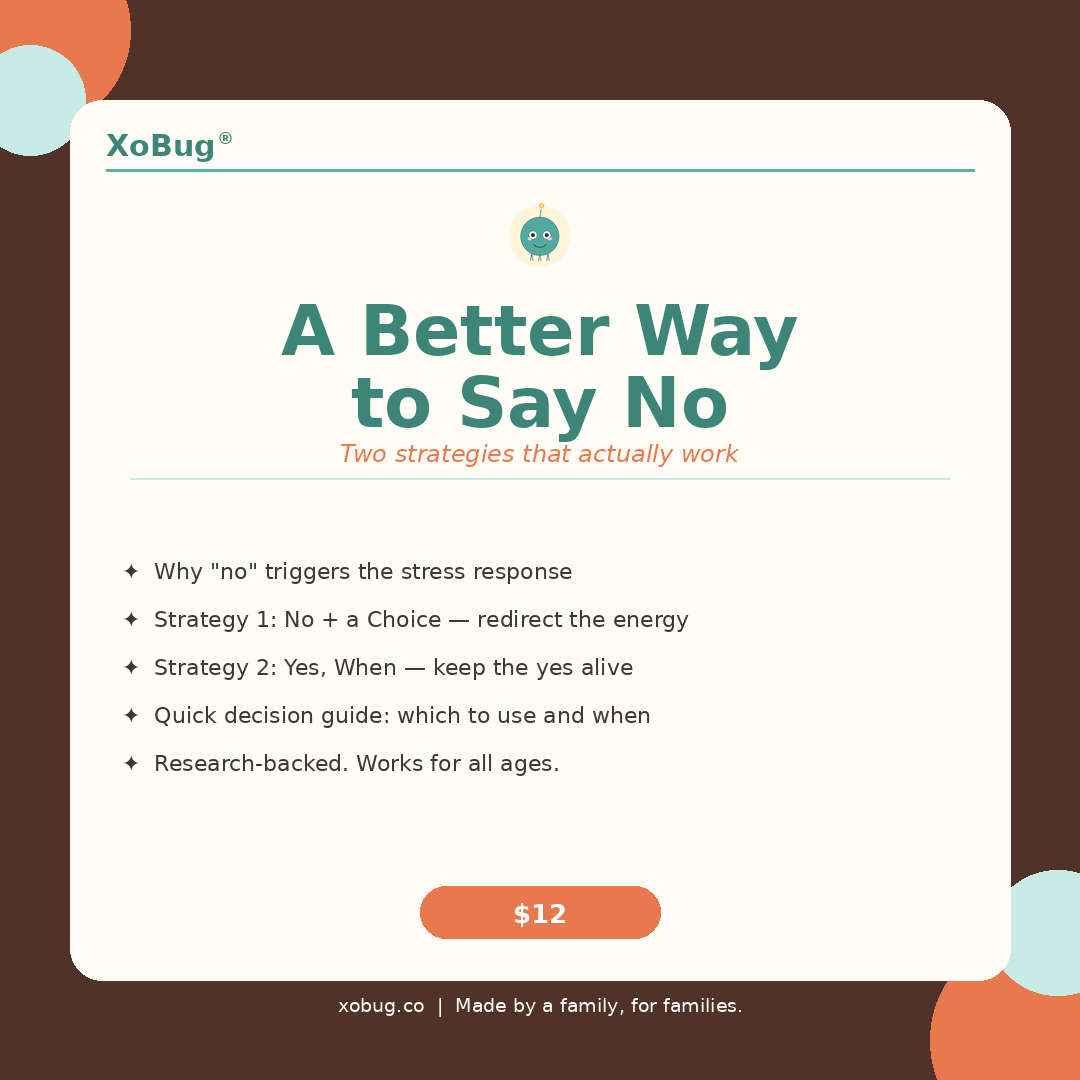
Why "no" triggers the stress response — what's happening in your child's brain
Strategy 1: No + a Choice — when the thing isn't available at all
Strategy 2: Yes, When — when the thing IS coming and you know when
A quick decision guide: which strategy to use and when
Real examples for the most common scenarios — screen time, food, transitions, leaving
How to practice both strategies during calm moments so they're there when you need them
How to brief your team so the strategies work everywhere
What to do when neither strategy works — troubleshooting guide
Research reference: Mace et al. (2011), Journal of Applied Behavior Analysis.
© 2026 XoBug®. For personal and family use only. Created by a physician-parent. Informed by behavioral science. Built for real life
Bug used to spiral every time we said no to screen time.
We started saying "Yes — after dinner and teeth." The first time he went and brushed his teeth without a fight, we both cried a little. It wasn't magic. It was repetition, and giving him something real to wait for.
These two strategies — No + a Choice and Yes, When — are backed by research and simple enough to use at 7am on a Tuesday. They work because they give your child somewhere to go instead of a wall to run into.
What's inside:
Why "no" triggers the stress response — what's happening in your child's brain
Strategy 1: No + a Choice — when the thing isn't available at all
Strategy 2: Yes, When — when the thing IS coming and you know when
A quick decision guide: which strategy to use and when
Real examples for the most common scenarios — screen time, food, transitions, leaving
How to practice both strategies during calm moments so they're there when you need them
How to brief your team so the strategies work everywhere
What to do when neither strategy works — troubleshooting guide
Research reference: Mace et al. (2011), Journal of Applied Behavior Analysis.
© 2026 XoBug®. For personal and family use only. Created by a physician-parent. Informed by behavioral science. Built for real life